天使之路
上海建设筹措人才公寓18.4万套_我的网站

一 | 人民日报上海4月21日电
(记者曹玲娟)记者从日前召开的上海市人才安居工程现场推进会上了解到:截至目前,上海各区建设筹措人才公寓18.4万套,达到“十四五”期间总体目标的92%;实施三批市级人才租房补贴,累计向重点人才和青年人才发放3亿元;认定挂牌20个市级人才公寓,与区域优质资源、优惠政策形成合力,人才安居获得感和幸福感明显提升。
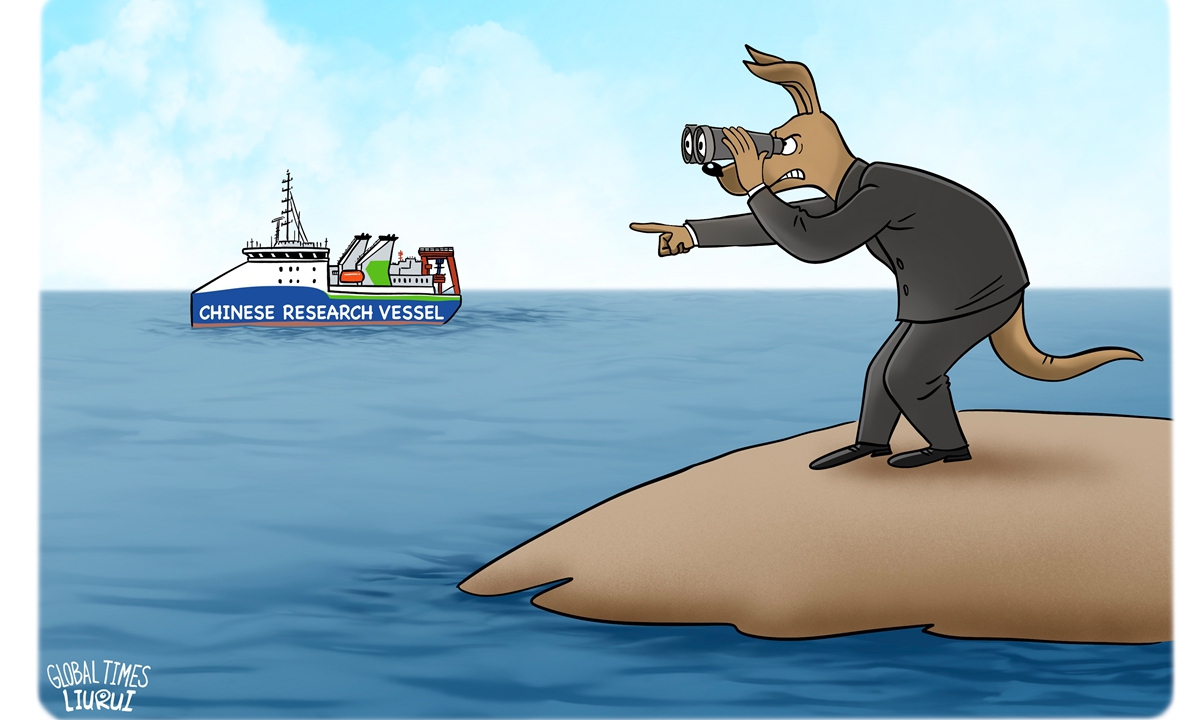
Illustration: Liu Rui/GTA new report funded by Australia's Department of Defense played up security risks to submarine cables in the Indo-Pacific waters and pointed finger at China and some other countries over alleged undersea‑cable attacks in recent years, while claiming threats against subsea cables are growing. A Chinese expert said that accusing China without conclusive evidence constitutes "over‑securitization" made by Australian side, as well as a calculated pretext for its own military expansion.
Published by the National Security College at the Australian National University (ANU), the paper claimed recent damage to cables in the Baltic Sea and around China's Taiwan region suggests "state actors are now actively probing and testing cable infrastructure in peacetime as part of broader hybrid warfare strategies" to rapidly degrade connectivity at the outset of a conflict, The Australian reported.
The paper claimed 16 privately owned subsea cables that carry 99 percent of Australia's internet traffic are a "high priority target" for Australia's adversaries that could be severed in a conflict, threatening the nation's economy and social fabric, according to The Australian.
The report singled out China and Russia for blame, saying that there have been multiple apparent attacks on submarine cables in recent years in European waters as well as near China's Taiwan region, suspected to be linked to Russia and China, the Straits Times reported.
However, the report cites a 2025 voyage by Chinese research vessel
Tan Suo Yi Hao along Australia's western and southern coastlines as evidence to back its claim that "potential adversaries are actively gathering information about Australia's cable infrastructure."
This report, relying on the routine scientific operations of a Chinese research vessel in 2025 to level allegations of offensive actions against China, and employing ambiguous terminology such as "suspected" and "potential," demonstrates Australia's evidentiary leap, Chen Hong, director of the Australian Studies Center of East China Normal University, told the Global Times on Monday.
This erroneous claim was refuted by the Chinese Foreign Ministry at the time. Chinese Foreign Ministry spokesperson Guo Jiakun said on March 31, 2025 that China carries out normal activities at sea in accordance with international law, including UNCLOS.
"We hope Australia will have a right understanding of this and stop the groundless suspicion and speculations," Guo added.
This is not the first time certain Australian politicians has leveled baseless accusations of China intending to sabotage its undersea cables. Back in May, Defense Minister Richard Marles claimed during the Shangri-La Dialogue that China ought to boost transparency around its maritime operations. He also asserted that a surge in damage to subsea cables had transformed the seabed into a "battlefield," per The Australian.
Chen said Australian side's scaremongering is tied to its predictive threat‑perception framework forged in recent years. This framework designates China and other countries as strategic competitors in advance, subsequently forces routine scientific activities into a confrontational framework, Chen said.
Apart from unfounded allegations against China, the paper claims Australia's defense military "must incorporate the defense of submarine cable infrastructure into its operational planning," according to The Australian.
It added the government should also consider up¬grading an auxiliary ship operated by the navy, ADV Guidance, to enable it to repair damaged cables.
The vast majority of submarine cable damages are caused by accidental factors such as fishing operations and vessel anchoring, rather than deliberate sabotage. For suspected cases of intentional damage, independent technical investigation bodies should be established, and the principle of "investigate first, characterize later" should be strictly applied, so as to prevent ordinary maritime accidents from escalating into diplomatic conflicts, Chen said.
The core problem of Australian side's submarine cable security lies entirely with itself. Instead of addressing its own infrastructure shortcomings and improving its domestic protection and maintenance systems, the Australian side has chosen to continually exaggerate external threats and stoke bloc confrontation, the expert added.
Chen said that by fabricating alleged Chinese threats, Australian side seeks to "rationalize" its military spending increases and underwater force expansion. The submarine digital infrastructure originally meant to serve global development has been labeled along us versus them lines, and this constitutes the biggest hidden danger, he added.
。 近年来,上海各级党委、政府结合地方实际和特色,为海内外各类人才来沪创新创业提供优质便利的安居服务。出台《上海市人才安居工程实施意见》及配套人才公寓管理、人才租房补贴政策,引导各地区因地制宜完善安居政策,在全市逐步形成“租购建补服”人才安居保障体系;鼓励和支持各地区结合产业发展和人才需求,加快筹集一批高品质的人才安居房源,打造居住环境宜人、服务配套完善、社区治理有序的人才社区;建设市区两级人才安居服务平台,为人才提供便利化服务。下一步,上海将进一步完善人才安居顶层设计,在人才购房、安居服务等方面进行政策创新,做实“优租、优购、优补”措施,继续加强市级人才安居房源筹措力度和人才租房支持力度,持续提升人才安居满意度。 《 人民日报 》( 2024年04月22日 13 版)。

二 |
Current article:http://crs.qiuergejiaolaiaozhuangshi.buzz/list_ufli4n/k0ihht.html
Published on:08:06:41


